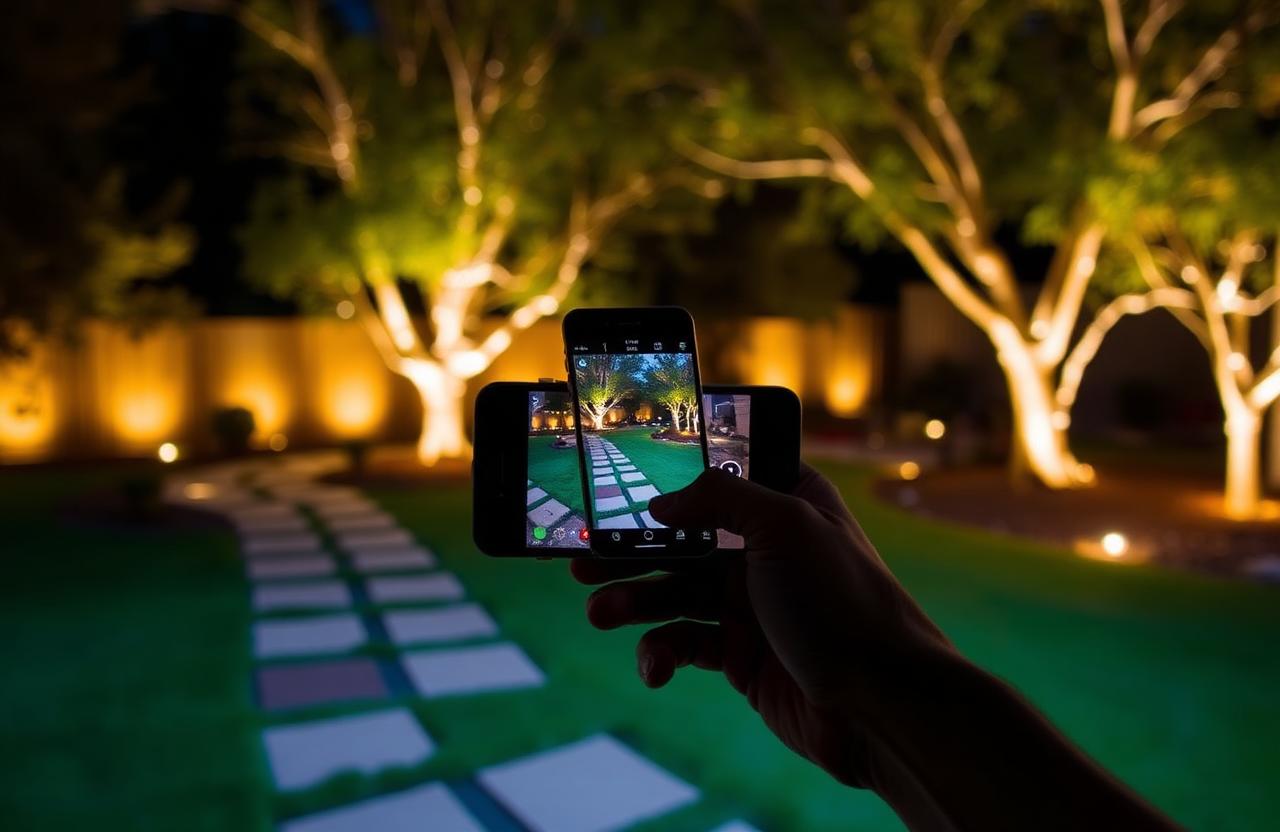
Most landscape lighting systems fail within three to five years, and almost never because the LEDs burned out. They fail because of cheap fixtures, undersized transformers, or sloppy wiring decisions made on day one. The good news is that a properly designed low-voltage outdoor lighting system, installed correctly, will run quietly and beautifully for ten years or more — often longer than the roof above it.
This guide walks through the four decisions that matter most when choosing landscape lighting: fixture material, transformer sizing, wiring and connections, and bulb color temperature. Get these right and your system will outlast the trends. Get them wrong and you'll be calling someone like us in 18 months to rip it all out.
1. Always Choose Brass or Copper Fixtures
Fixture material is the single biggest predictor of how long your landscape lighting will last. Aluminum and plastic fixtures look fine in the box and on day one, but they corrode quickly outdoors — especially within a few miles of the coast, in areas with hard water sprinklers, or anywhere road salt drifts in winter. Within two seasons the finish starts flaking, the housings crack, and the gaskets give up.
Solid brass and copper fixtures are the only outdoor lighting materials that actually improve with age. Brass develops a soft, mottled patina that reads warm and intentional, like aged hardware on a historic building. Copper goes from bright penny to deep chocolate to verdigris green over a decade. Both materials are essentially immune to corrosion in residential environments, and they're heavy enough not to get knocked over by a lawn crew.
Expect to pay $80–$200 per fixture for true solid brass path lights and up-lights. If the price feels high, remember you're amortizing it over a decade. Cheap aluminum path lights at $25 each will need full replacement twice in the same period, plus labor each time.
2. Size Your Low Voltage Transformer for 70% Load
The transformer is the heart of any low-voltage landscape lighting system, and it's where most DIY installs go wrong. The rule we use: never load a transformer past 70% of its rated wattage.
A 300-watt transformer should handle no more than about 210 watts of fixtures. That leaves headroom for two real-world issues: voltage drop on long cable runs, and the small extra current LEDs draw at startup. Transformers loaded to 90% or 100% run hot, hum audibly at night, and die in two to four years instead of ten.
Also look for a transformer with multiple voltage taps (12V, 13V, 14V, 15V). Long runs lose voltage along the wire, and being able to bump up to 13V or 14V on a distant zone keeps every fixture reading the same brightness. A single-tap transformer cannot fix voltage drop — you'll have bright fixtures near the box and dim ones at the end of the run, and there's nothing to adjust.
3. Use Direct-Burial Cable and Hub Connections
Wiring is invisible once the install is done, which is exactly why cheap installers cut corners there. The two decisions that matter: cable gauge and connection style.
For most residential landscape lighting, use 12-2 direct-burial cable for runs under 100 feet and 10-2 for anything longer. Thinner cable (14-2 or 16-2, which is what comes in box-store kits) drops voltage so aggressively that the last few fixtures on a run will be visibly dimmer than the first, no matter what transformer you use.
Connections are even more important. Pierce-point connectors — the kind that clamp onto the cable with a small spike — are the single most common failure point in outdoor lighting. They corrode within a couple of seasons, build up resistance, and start cooking fixtures off one by one. The right answer is hub-style waterproof connections: every fixture wire and main cable lead meets inside a sealed, gel-filled hub. They cost a few dollars more per connection and last as long as the cable itself.
4. Pick 2700K Warm White LEDs, Not Cool White
Color temperature is the easiest decision to get wrong because it doesn't show up in the catalog photo. Outdoor LED landscape lighting should almost always be 2700K — sometimes called warm white. This temperature reads natural and inviting on stone, brick, mulch, and foliage. It mimics the warm glow of incandescent without the energy bill.
3000K starts to feel slightly clinical, especially on cool-toned brick or gray stone. Anything 3500K or above outdoors looks like a parking lot or a gas station, no matter how expensive the fixture. The one exception is moonlighting — large-canopy down-lights mounted high in trees can use 3000K or 4000K to mimic actual moonlight, but that's a specialty technique, not a default.
Also insist on dimmable LEDs and a dimmable transformer. The right brightness for an entry path at 7pm in summer is not the right brightness at 11pm in December. A simple astronomic timer with dimming makes a system feel custom every night of the year.
What This Costs and What It Saves
A properly specified low-voltage landscape lighting system using brass fixtures, a 70%-loaded transformer, 12-2 direct-burial cable, hub connections, and 2700K LEDs typically runs $4,000–$15,000 installed for a residential property, depending on fixture count and design complexity. The cheap version of the same project, using box-store materials, runs roughly half that — and gets replaced inside five years.
Doing it right the first time is genuinely cheaper over a 10-year window, and it looks better every single night in between. That's the entire argument for hiring a professional landscape lighting installer who specs brass, sizes transformers conservatively, and refuses to use pierce-point connectors. If you're getting bids that don't mention any of these four decisions in writing, keep shopping.
Key takeaways
- 1. Always Choose Brass or Copper Fixtures
- 2. Size Your Low Voltage Transformer for 70% Load
- 3. Use Direct-Burial Cable and Hub Connections
- 4. Pick 2700K Warm White LEDs, Not Cool White
- What This Costs and What It Saves
Frequently asked
- What's the takeaway from "How to Choose Landscape Lighting Fixtures That Last 10+ Years"?
- A homeowner's guide to picking outdoor landscape lighting fixtures, transformers, bulbs, and wiring that survive a decade outside without fading, corroding, or failing.
- Do you install outdoor lighting nationwide?
- Yes — across 30+ states and growing. Browse the locations directory for your city.
Related services
Featured service areas
Keep reading
Permanent Holiday Lighting Cost, Pros and Cons (2025 Buyer's Guide)
Permanent holiday lighting (Trimlight, Jellyfish, Everlights) explained: real installation cost, how it works, warranty red flags, and the questions to ask before you sign.
Low Voltage vs Line Voltage Outdoor Lighting: Which One to Use
When to choose 12V low-voltage landscape lighting and when 120V line-voltage outdoor lighting is the better answer, with real cost, safety, and design tradeoffs.