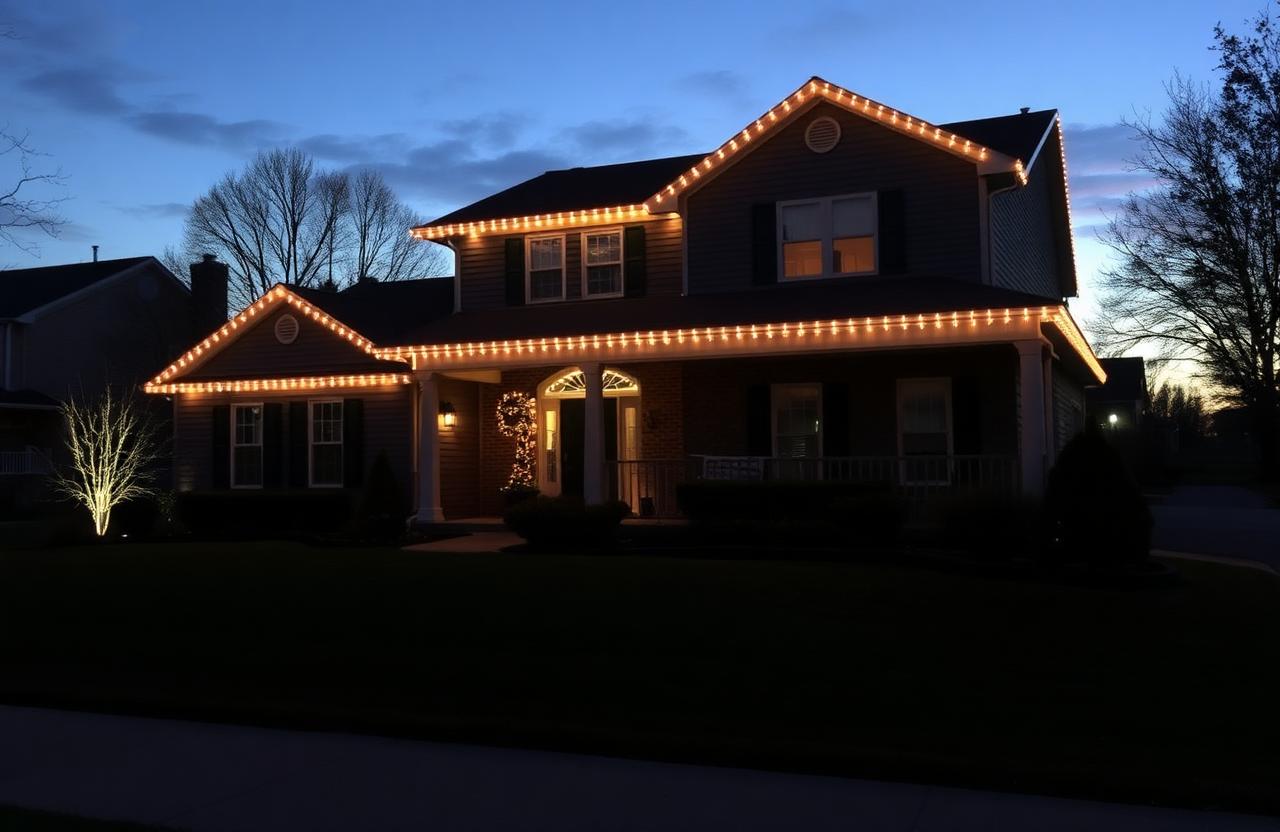
Dark-sky compliant outdoor lighting isn't a trend — it's a fast-growing requirement in HOAs, municipal codes, and conservation communities across the country. More importantly, it's the right way to design residential lighting in any setting, because dark-sky principles produce better-looking landscapes than the spray-and-pray approach that dominates suburban lighting.
This guide explains what dark-sky compliance actually means, why the principles produce better residential design, and how to specify a fully DarkSky-approved landscape lighting system without sacrificing aesthetics.
What Dark Sky Compliance Actually Means
DarkSky International (formerly the International Dark-Sky Association) maintains the certification standards for fixtures and installations. A truly dark-sky compliant outdoor lighting design follows five principles:
1. **Useful**: Light only where it's needed 2. **Targeted**: Direct light only at what needs to be lit 3. **Low level**: Use the minimum brightness necessary 4. **Controlled**: Use timers and motion sensors so lights aren't on when not needed 5. **Warm-colored**: Use 3000K or lower color temperature
The most concrete rule, and the one most homeowners haven't heard, is that no fixture should emit any light above the horizontal plane. Practically, this means every fixture must be fully shielded — the bulb is recessed inside an opaque housing, and light exits only downward or laterally, never up.
Why Dark Sky Principles Produce Better Residential Design
Here's the thing most installers don't tell homeowners: dark-sky principles aren't a sacrifice for the sake of the night sky. They produce demonstrably better residential lighting design. A fully-shielded fixture creates a sharper, more deliberate pool of light than an unshielded one. Light aimed only where it's wanted reads as intentional rather than accidental. 2700K warm-white light flatters stone, brick, and foliage in ways 4000K cool-white never will.
Almost every nighttime photograph you've ever admired of a residential landscape lighting design was, by accident or design, dark-sky compliant. The principles are essentially the same as the principles of good landscape lighting design. Compliance just makes them official.
Fixture Shielding: The Single Most Important Rule
Full-cutoff shielding means a fixture emits zero light above the horizontal plane. Every reputable landscape lighting fixture manufacturer (Kichler, FX Luminaire, Unique, VOLT, WAC) sells fully-shielded path lights, up-lights, down-lights, and step lights. There's no real cost premium for shielded versions — they're often the same price as unshielded options.
The fixtures to avoid are old-style 'mushroom' path lights that throw light in a full sphere, post-mounted lantern lights with clear panels (which leak light skyward through the top), and uncovered floodlights aimed at trees or facades. Even a beautiful copper lantern post light fails dark-sky compliance if the top is glass — you need either an opaque cap or a fixture explicitly marketed as full-cutoff.
Color Temperature: 3000K Maximum, 2700K Preferred
Cool-white light (4000K and above) scatters in the atmosphere more aggressively than warm-white light and contributes disproportionately to sky glow. Warm-white light (2700K) also reads better on natural materials and produces less light pollution per lumen. Almost every DarkSky-approved fixture caps out at 3000K. The current best practice for residential is 2700K.
This rule alone eliminates most cheap big-box outdoor LED fixtures, which default to 4000K because cool-white LEDs are slightly cheaper to manufacture. It also rules out most security floodlights, which are typically 5000K. If you need bright security lighting in a dark-sky zone, use 3000K motion-activated fixtures rather than always-on 5000K floods.
Controlled Operation: Timers, Photocells, and Motion
Dark-sky principles require that outdoor lighting be on only when needed. The practical implementation is:
- Astronomic timer that turns lights on at dusk and off at a defined time (commonly 11pm or midnight) - Photocell backup so lights don't come on early on overcast days - Motion-activated security lighting that stays off until triggered - Optional separate 'after-hours' zone — soft path and safety lighting that stays on all night, with the decorative landscape lighting shutting down by midnight
The all-night-on approach that's common in suburban landscape lighting fails dark-sky compliance and wastes 70–80% of the energy a properly controlled system uses. A typical residential install running 4 hours per night uses about $40–$60 of electricity per year. The same install running all night uses $200–$300. The math is obvious.
DarkSky-Approved Fixtures That Look Great
The good news for homeowners worried about aesthetics is that the DarkSky-approved fixture list reads like a who's-who of the highest-quality landscape lighting manufacturers. Brands with extensive approved product lines include FX Luminaire, Kichler, Hinkley, VOLT, Unique Lighting, and WAC Lighting. All of them make solid brass and copper fixtures that look indistinguishable from non-compliant options — because the only meaningful difference is the internal shielding.
The DarkSky Approved Products database is searchable by category and is the easiest way to spec a fully-compliant system. Filter by 'residential outdoor,' pick the fixture types you need, and you'll find quality options in every category.
When Dark Sky Compliance Is Required
Many newer developments, HOAs, and entire municipalities now require dark-sky compliant outdoor lighting on new installs. Most of Arizona, much of New Mexico, parts of Hawaii, and growing portions of Colorado, Utah, and Texas have enforceable dark-sky ordinances. Some national park-adjacent communities have very strict rules — Sedona, Flagstaff, and Tucson among them.
Always check local code before specifying outdoor lighting. The penalty for non-compliant installs is usually a requirement to rebuild the entire system, which costs far more than just designing it correctly from the start.
What This Costs Versus Standard Installs
A fully dark-sky compliant landscape lighting system costs the same as a quality non-compliant install. The fixtures are not more expensive; the labor is not different. The only meaningful difference is in fixture selection and timer programming. Any installer who quotes you a 'dark-sky premium' is either unfamiliar with the approved-products list or padding the bid.
Key takeaways
- What Dark Sky Compliance Actually Means
- Why Dark Sky Principles Produce Better Residential Design
- Fixture Shielding: The Single Most Important Rule
- Color Temperature: 3000K Maximum, 2700K Preferred
- Controlled Operation: Timers, Photocells, and Motion
Frequently asked
- What's the takeaway from "Dark Sky Compliant Outdoor Lighting: Design Without Light Pollution"?
- How to design residential outdoor lighting that is dark-sky friendly — fixture shielding, color temperature limits, and the DarkSky-approved fixtures that look great too.
- Do you install outdoor lighting nationwide?
- Yes — across 30+ states and growing. Browse the locations directory for your city.
Related services
Featured service areas
Keep reading
How to Choose Landscape Lighting Fixtures That Last 10+ Years
A homeowner's guide to picking outdoor landscape lighting fixtures, transformers, bulbs, and wiring that survive a decade outside without fading, corroding, or failing.
Permanent Holiday Lighting Cost, Pros and Cons (2025 Buyer's Guide)
Permanent holiday lighting (Trimlight, Jellyfish, Everlights) explained: real installation cost, how it works, warranty red flags, and the questions to ask before you sign.