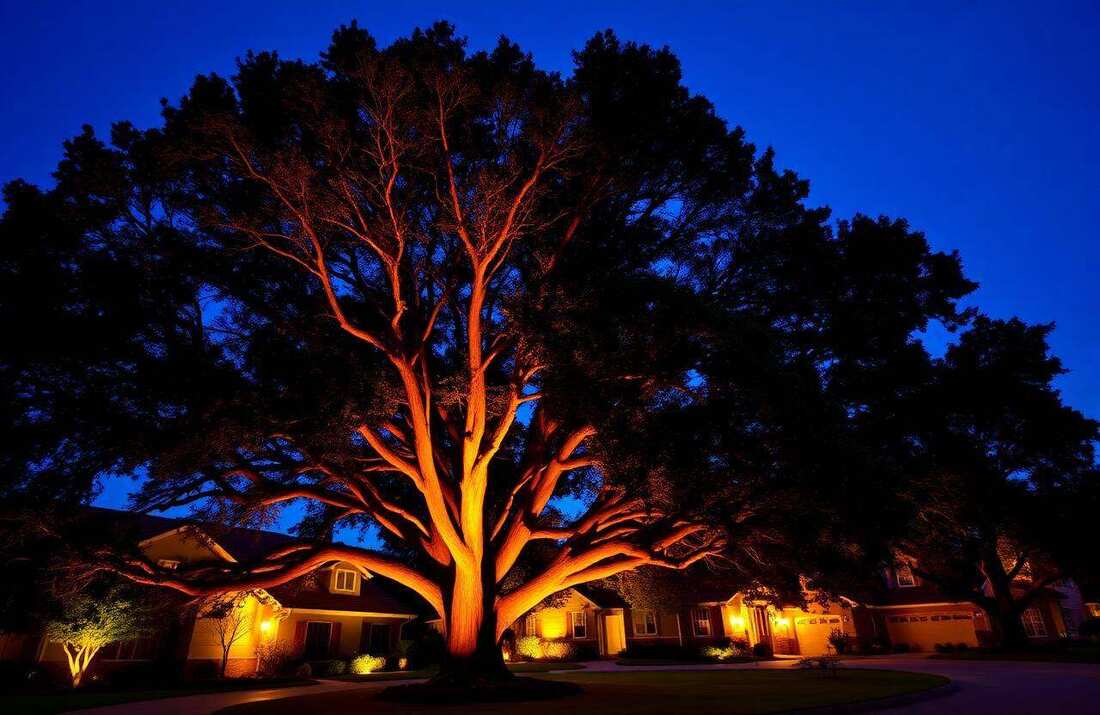
Color temperature is the single most consequential outdoor lighting decision that homeowners get wrong, by a wide margin. Pick the wrong color temperature and even the most expensive brass fixture with perfect aim looks bad. Pick the right one and modest fixtures with reasonable aim look beautiful. Almost no other variable in outdoor lighting has this much leverage.
This guide explains what color temperature actually is, why 2700K is the right answer for almost every residential outdoor lighting application, and the narrow cases where other color temperatures make sense.
What Color Temperature Actually Measures
Color temperature is measured in degrees Kelvin (K) and describes the visual warmth or coolness of white light. Lower numbers are warmer (more yellow / amber); higher numbers are cooler (more blue / white):
- 2200K: deep amber, candle-flame warm (vintage Edison bulbs) - 2700K: warm white, classic incandescent (the residential standard) - 3000K: soft white, slightly cooler than incandescent - 3500K: neutral white, slightly warm-toned - 4000K: cool white, hospital / office standard - 5000K: daylight white, commercial outdoor - 6500K: blue-white, the coolest in normal use
The number does NOT describe brightness — it only describes color. A 2700K bulb and a 4000K bulb can produce identical lumens; they'll just look very different visually.
Why 2700K Wins for Residential Outdoor Lighting
2700K is the right default for almost every residential outdoor lighting application for three reasons:
**1. It reads natural on every material.** Brick, stone, stucco, wood, mulch, foliage, grass — all of these read correctly under 2700K. The warm tone flatters natural materials the way evening sunlight does. Cooler color temperatures make brick look gray, mulch look bluish, foliage look unhealthy, and stone look cold.
**2. It matches the warm glow of indoor light.** A home with 2700K outdoor lighting reads visually consistent with the warm interior lighting visible through the windows. Cool-white outdoor lighting next to warm interior windows produces visual dissonance — the inside looks inviting and the outside looks institutional.
**3. It produces less light pollution.** Cool-white light scatters more aggressively in the atmosphere than warm-white light, contributing disproportionately to sky glow. 2700K is the right answer not just aesthetically but environmentally — it's the standard for DarkSky-compliant residential lighting.
What Goes Wrong With Cool-White Outdoor Lighting
Cool-white outdoor lighting (4000K and above) is the single most common outdoor lighting mistake in U.S. residential properties. It happens because cool-white LEDs are slightly cheaper to manufacture, big-box stores stock them by default, and homeowners assume 'brighter = better' (which is true only of lumens, not color temperature).
The visual result is uniformly bad. Cool-white outdoor lighting makes:
- Brick facades look gray and washed out instead of warm and rich - Mulched garden beds look blue-gray instead of natural brown - Foliage look unhealthy yellow-green instead of vibrant green - Stone hardscape look cold and clinical - The entire property feel like a gas station or parking lot
The fix is replacing every outdoor LED bulb with a 2700K version. The bulbs cost the same as cool-white versions and the visual upgrade is immediate.
When 3000K Makes Sense
3000K is acceptable in a few specific cases:
- **Modern architecture with white-painted facades.** The slight coolness of 3000K can emphasize the crispness of white walls. 2700K can read slightly yellow on white. Either works; this is the one case where designers genuinely split. - **Coastal architecture.** Homes near water sometimes look better with a slightly cooler color temperature that reads more 'beach' than 'cottage.' 3000K is the warmest most coastal designers go. - **Some commercial-adjacent residential.** Mixed-use buildings, urban townhomes facing commercial corridors, and other transitional properties may want 3000K to fit the surrounding lighting context.
Outside these specific cases, 3000K is just slightly cool 2700K and doesn't offer real advantages. If you're not sure which to pick, pick 2700K.
When 4000K and Above Make Sense
Cool-white outdoor lighting (4000K and above) has legitimate uses, but very few of them are residential:
- **Security camera support.** Color-accurate camera footage benefits from cooler color temperature (3500–4000K). If a fixture's primary job is illuminating an area for camera footage, cooler color is justified. - **Motion-activated security floods.** Security fixtures that trigger on motion benefit from cooler color to clearly signal 'security event' visually and produce useful evidence footage. - **Outdoor task lighting (workshops, work areas, garage interiors).** Color-accurate work lighting benefits from 4000K. Don't carry this temperature into the surrounding decorative landscape lighting. - **Sports and play areas.** Outdoor courts and pool decks intended for sport use benefit from cooler color (3500K) for accurate visibility of ball color and surface markings.
The pattern: cool-white outdoor lighting belongs in functional applications where color accuracy matters. It does not belong in decorative landscape lighting, facade lighting, path lighting, or any general residential outdoor lighting where ambience is the goal.
Color Tunable vs Fixed Color Temperature
A growing category of outdoor LEDs is 'color tunable' — fixtures where the color temperature can be adjusted electronically, usually from 2200K to 4000K or so. These are useful for:
- Spaces that serve multiple purposes (a backyard that hosts both quiet dinners and pickup basketball) - Homeowners who haven't decided on a color preference - Smart-home scenes where different times of day get different color temperatures
Color tunable fixtures cost 30–60% more than fixed-color fixtures, and most installations end up running 2700K most of the time anyway. They're worth it for specific multi-purpose applications and overkill for typical residential landscape lighting.
Mixing Color Temperatures (Carefully)
Within a single residential property, color temperature consistency reads more designed than mixed temperatures. The right approach is 2700K (or your chosen primary temperature) across all decorative landscape lighting, with cool-white reserved only for separate-purpose fixtures (security floods, work lighting) that are visually segregated from the main lighting design.
Avoid mixing color temperatures within the same visual zone. A facade with three up-lights at 2700K and two up-lights at 3000K will look subtly wrong even if no one can articulate why. The eye notices.
Specifying Color Temperature Correctly
When working with an installer or buying fixtures yourself, every bulb and every integrated LED fixture should have its color temperature clearly listed in Kelvin. The right specifications:
- Path lights, accent lights, up-lights, wall fixtures: 2700K - Step lights and deck lighting: 2700K - Facade lighting: 2700K (3000K for white-painted modern architecture) - Tree up-lighting: 2700K - Security lighting: 3000–4000K - Underwater pool lighting: 6500K or color-tunable (this is one case where cool-white is appropriate; warm-white in a pool looks yellow) - Outdoor task lighting (workshops, grills): 4000K
If a fixture spec sheet doesn't list a color temperature in Kelvin, don't buy it. That's a sign the manufacturer is cutting corners on quality control.
Key takeaways
- What Color Temperature Actually Measures
- Why 2700K Wins for Residential Outdoor Lighting
- What Goes Wrong With Cool-White Outdoor Lighting
- When 3000K Makes Sense
- When 4000K and Above Make Sense
Frequently asked
- What's the takeaway from "Outdoor Lighting Color Temperature Guide: Why 2700K Almost Always Wins"?
- A complete guide to color temperature in outdoor lighting — why 2700K is the right default, when 3000K and 4000K make sense, and the specific applications for cool-white outdoor LEDs.
- Do you install outdoor lighting nationwide?
- Yes — across 30+ states and growing. Browse the locations directory for your city.
Related services
Featured service areas
Keep reading
How to Choose Landscape Lighting Fixtures That Last 10+ Years
A homeowner's guide to picking outdoor landscape lighting fixtures, transformers, bulbs, and wiring that survive a decade outside without fading, corroding, or failing.
Permanent Holiday Lighting Cost, Pros and Cons (2025 Buyer's Guide)
Permanent holiday lighting (Trimlight, Jellyfish, Everlights) explained: real installation cost, how it works, warranty red flags, and the questions to ask before you sign.