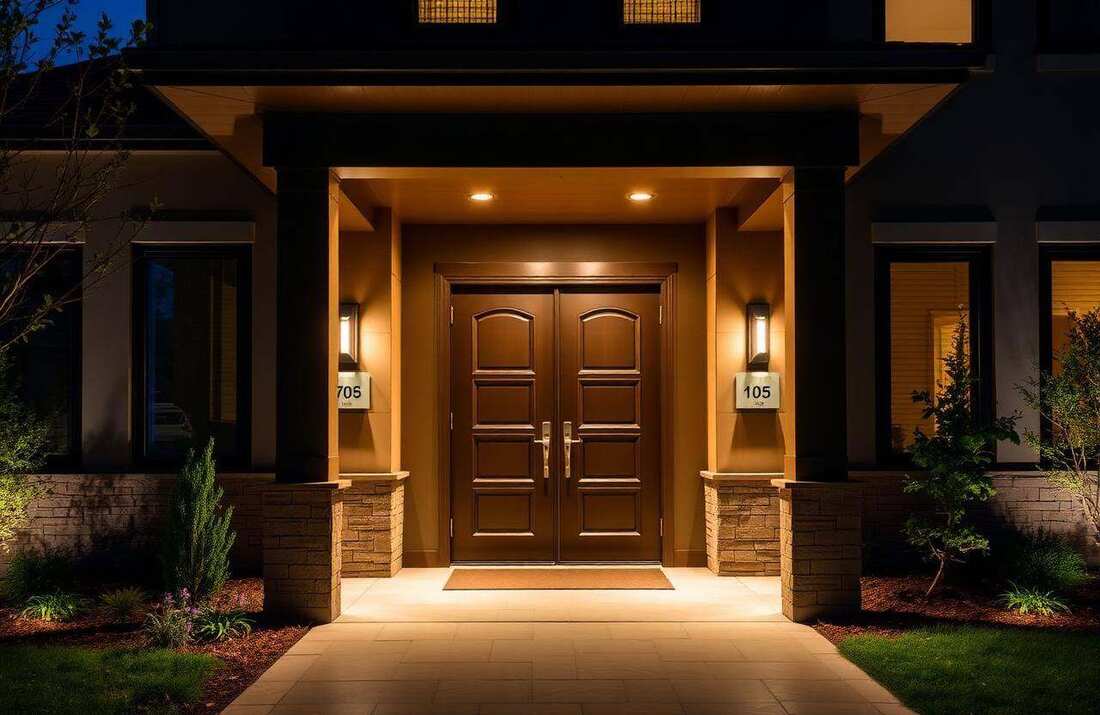
Solar landscape lighting is the most over-recommended product category in residential outdoor lighting. Big-box stores sell solar path lights for $15 a fixture, the marketing promises 'no wiring, no electricity bills, environmentally friendly,' and homeowners install them by the hundreds — only to see most of them fail within 12–18 months.
This isn't because solar is inherently bad. It's because solar is the wrong technology for most residential outdoor lighting applications, and the right technology for a very specific handful of others. Knowing which is which saves you from wasting money on the wrong solution.
What Solar Landscape Lighting Actually Is
A solar landscape light has four components: a small photovoltaic panel, a rechargeable battery (usually NiMH or, on better fixtures, lithium), an LED bulb, and a basic charge controller. During the day the panel charges the battery; at night the battery runs the LED until it runs out, then the light goes off.
The hardware sounds simple and it largely is. The problem is that all four components have aggressive limits in residential use:
- The panel is small and produces enough energy for only a few hours of dim light per night - The battery degrades meaningfully every charge cycle, losing capacity over 200–500 cycles (less than two years of daily use on cheap NiMH) - The LED brightness is limited by the battery, usually 5–20 lumens per fixture — roughly a tenth of what a wired equivalent produces - The controller is the cheapest part of the cheapest fixtures and fails first
The result is a category of products that work okay for the first 6–9 months and then visibly degrade — dimmer light, shorter runtime each night, eventual total failure.
Why Most Solar Path Lights Fail Fast
The $15 solar path light from a big-box store has a battery rated for ~300 charge cycles. At one cycle per day, that's about 10 months before measurable capacity loss. By 18 months the fixture is producing visibly less light and running for less time each night. By 24 months most fixtures are either off or producing useless levels of light.
Better solar fixtures with lithium batteries last 3–5 years before similar degradation. They cost $50–$100 per fixture rather than $15. They're still dimmer than wired equivalents, but they reach the threshold of 'actually useful' that the cheap fixtures never hit.
The cost math is unforgiving. A $15 solar path light replaced every 18 months costs $50–$100 over a decade. A $50 lithium solar path light replaced every 4–5 years costs $100–$150 over a decade. A $250 wired brass path light installed once lasts 10+ years. The wired fixture is more expensive upfront but lower total cost of ownership and produces dramatically better light.
Where Solar Genuinely Makes Sense
There are three residential applications where solar is the right answer, not a compromise:
**1. Long Rural Driveways.** Running 500+ feet of low-voltage cable down a long driveway is expensive ($2–$5 per foot installed) and the lighting result is modest. Solar driveway markers spaced every 30–50 feet do a comparable way-finding job for a fraction of the cost. Buy quality fixtures ($40–$80 each with lithium batteries) and they'll last 4–6 years.
**2. Detached Sheds and Outbuildings.** Lighting a detached shed, garden building, or guesthouse that doesn't have its own electrical run is a perfect solar application. A single quality solar wall fixture provides enough security and way-finding lighting without the cost of trenching power to the building.
**3. Off-Grid Properties.** Cabins, rural lots without service, and any property where you don't have grid electricity to begin with. Solar isn't competing with wired here — it's the only option.
For everything else (front yards, walkways, accent lighting, tree up-lighting, facade lighting), solar is the wrong technology. Wired low-voltage produces dramatically better light at lower 10-year cost.
What Quality Solar Looks Like
If you're installing solar in one of the right applications, look for these features:
- Lithium-iron-phosphate (LiFePO4) battery, not NiMH or generic lithium-ion (much longer cycle life) - 5+ year battery warranty (cheap fixtures warranty the bulb but not the battery — that's a tell) - 5+ watt LED with at least 100 lumens of output - Separate panel that can be mounted in a sunnier location than the fixture itself (most quality solar bollards do this) - IP65 or better weather rating on both panel and fixture - Replaceable battery (so you can swap the battery at year 5 instead of replacing the whole fixture)
Quality solar with these features costs $60–$150 per fixture installed and actually delivers usable light for 5+ years. Cheap solar at $15–$25 per fixture costs about the same per decade after replacements and never delivers useful light at any point.
The Hybrid Approach
For long driveways where you want strong lighting at the entrance and parking area but only way-finding along the middle stretch, hybrid systems work well: wired low-voltage for the entrance and parking, solar markers for the long straight runs. You get the best of both — quality lighting where it matters, low-cost markers where it doesn't.
What This Means for Most Homeowners
If you're considering solar for a typical front yard, walkway, accent, or facade application, choose wired low-voltage instead. The total cost of ownership is lower, the light quality is dramatically better, and the system actually keeps working past year three.
If you're considering solar for a rural driveway, off-grid property, or detached outbuilding, buy quality solar with lithium batteries and a 5-year warranty. Skip the $15 fixtures entirely; they'll cost you more in replacements than the quality versions cost upfront.
The single most expensive way to do outdoor lighting in 2026 is to install cheap solar fixtures everywhere, replace them every 18 months for a decade, and end up with a yard that never actually looks lit. That's the path the marketing pushes most homeowners toward. Knowing where solar actually works lets you skip the trap.
Key takeaways
- What Solar Landscape Lighting Actually Is
- Why Most Solar Path Lights Fail Fast
- Where Solar Genuinely Makes Sense
- What Quality Solar Looks Like
- The Hybrid Approach
Frequently asked
- What's the takeaway from "Solar vs Wired Landscape Lighting: When Each One Actually Makes Sense"?
- An honest comparison of solar and wired landscape lighting for residential use — performance, reliability, cost, and the situations where solar is genuinely the right choice.
- Do you install outdoor lighting nationwide?
- Yes — across 30+ states and growing. Browse the locations directory for your city.
Related services
Featured service areas
Keep reading
How to Choose Landscape Lighting Fixtures That Last 10+ Years
A homeowner's guide to picking outdoor landscape lighting fixtures, transformers, bulbs, and wiring that survive a decade outside without fading, corroding, or failing.
Permanent Holiday Lighting Cost, Pros and Cons (2025 Buyer's Guide)
Permanent holiday lighting (Trimlight, Jellyfish, Everlights) explained: real installation cost, how it works, warranty red flags, and the questions to ask before you sign.